
Arrests.org NC – North Carolina Public Arrest, Inmate & Mugshot Records
Arrests.org NC searches allow citizens to locate public records, view mugshots, and verify custody status for individuals across North Carolina. State laws mandate that most arrest data remain open for public inspection. This transparency helps communities stay informed about safety and law enforcement activities. When you perform a search, you connect with databases maintained by county sheriffs, the state prison system, and court clerks. You can find out who is in jail, what charges they face, and when their court date is scheduled.
North Carolina statutes classify arrest reports as public records. This means anyone can request to see them. You do not need a lawyer or a special license. You only need the name of the person and the county where the event happened. The data comes from the moment a person enters a detention center. Officers create a booking log. This log lists the suspect’s name, the alleged crime, and the time of detention. This page explains exactly how to locate these files using official government portals and public access points.

Why Check Arrest Records in North Carolina?
Checking arrest records serves many safety and personal purposes. Families use these tools to locate missing relatives who may have been detained. Neighbors check local booking logs to see activity in their community. Employers might review public records during a hiring process to ensure workplace safety. Landlords often verify the background of potential tenants to protect their property.
You might also check records for legal reasons. If you are a victim of a crime, you can track the status of the accused. You can see if they are still in jail or if they posted bond. This knowledge helps victims plan for their safety. Legal professionals use these searches to gather initial data for defense or prosecution cases. The system allows you to monitor the judicial process from the initial booking to the final court verdict.
Legal Rights to Access Public Records
North Carolina General Statute Chapter 132 defines public records. This law declares that records made by government agencies belong to the people. This includes arrest reports, jail rosters, and 911 logs. The law requires custodians of these records to permit inspection at reasonable times. Custodians are usually the county sheriff or the clerk of court. They must provide copies when asked, though they may charge a small printing fee.
Exceptions exist. You cannot see juvenile records. The state seals files for offenders under 18 to protect their future. You also cannot see details that might harm an active investigation. If releasing a fact would endanger a witness, the police can withhold it. However, the basic facts of an adult arrest—name, charge, and photo—almost always remain open to the public.
NC County Jail Lookup: Viewing Local Rosters
Most arrests in North Carolina start at a county jail. The Sheriff’s Office in each of the 100 counties manages these facilities. When police arrest someone, they take them to the county jail for processing. This is where the first record appears. To find someone arrested recently, you must check the specific county roster.
How to Search County Sheriff Databases
Each county operates its own system. Large counties like Wake, Mecklenburg, and Guilford have online search tools. You type in a last name, and the system shows a list of inmates. Small counties might not have a website. In those cases, you must call the jail directly. Follow these steps for a successful lookup:
- Identify the County: You must know where the arrest happened. A person arrested in Raleigh goes to the Wake County Detention Center. A person arrested in Charlotte goes to the Mecklenburg County Jail.
- Visit the Official Website: Go to the Sheriff’s Office page for that county. Look for links like “Inmate Search,” “Detention Center,” or “Current Inmate List.”
- Enter Correct Details: Spelling matters. If you spell the name wrong, the system will return no results. Try searching by just the last name if you are unsure of the first name.
- Review the Status: The result will show if the person is “Active” (in jail) or “Released.”
The roster updates often. Some counties update every hour. Others update once a day. If you do not see a record immediately, wait a few hours and try again. Processing a new inmate takes time.
What Data is in a Jail Roster?
A jail roster entry gives you a snapshot of the current situation. It tells you why the person is there and how long they might stay. You will typically see:
- Full Name and Alias: The legal name and any nicknames the police have on file.
- Booking Photo: The mugshot taken when they arrived at the jail.
- Booking Number: A unique ID for that specific arrest event.
- Charges: The specific laws the person allegedly broke.
- Bond Amount: The money required to get out of jail.
- Court Date: When they must appear before a judge.
NC Inmate Locator: Finding State Prisoners
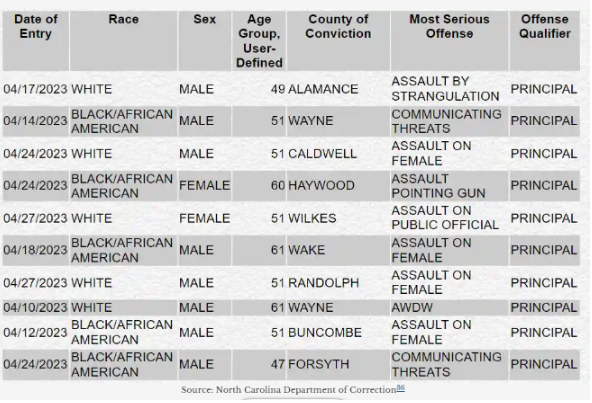
State prisons are different from county jails. Jails hold people waiting for trial or serving short sentences. Prisons hold people convicted of serious crimes (felonies) with sentences longer than one year. The North Carolina Department of Adult Correction (NC DAC) manages the prison system. They maintain a single database for all state prisoners.
Using the NC DAC Offender Search
The NC DAC provides a powerful search tool for the public. This tool covers current inmates, parolees, and probationers. It is the best way to find someone serving a long sentence. To use it:
- Go to the NC DAC website.
- Select “Offender Public Information.”
- Enter the offender’s last name and first initial.
- You can also search by “OPUS Number” if you know it. This is the state ID for the inmate.
The results provide a complete history. You can see every crime the person was convicted of in North Carolina. You can see their projected release date. You can also see which prison facility houses them right now. This is useful for families who need to schedule visits or send mail.
Probation and Parole Searches
Many offenders are not in prison. They live in the community under supervision. This is called probation or parole. The NC DAC database includes these individuals. When you search, look at the “Status” column. It might say “Active Probation” or “Parole.” This means the person is free but must report to an officer. The record will list the county where they are supervised. This helps you know if a convicted offender is living in your area.
Understanding North Carolina Mugshots
Mugshots are the photos taken during the booking process. In North Carolina, these photos are public records. Sheriff’s offices usually publish them on their online rosters. Third-party sites also collect and display them. The purpose of the mugshot is to identify the suspect and document their physical condition at the time of arrest.
Accessing Mugshot Databases
You can view mugshots for free on most county sheriff websites. You look up the inmate, and the photo appears next to their name. If the county does not put photos online, you can go to the Sheriff’s office and ask to see the arrest log. They must show it to you. The NC DAC also publishes photos of state prisoners. These photos are updated periodically to show how the inmate looks now.
Privacy and Removal of Mugshots
Sometimes people want mugshots removed. This is difficult because the photo is a public record. However, North Carolina law prohibits websites from charging money to remove a mugshot. If a website asks for payment to delete your photo, they are breaking the law. You can report them to the North Carolina Department of Justice. If your criminal case is dismissed or expunged, you have the right to have the record and photo removed from official government sites. You must file a form with the court to start this process.
Charges, Bonds, and Bail Procedures
When police arrest someone, they charge them with a specific crime. A magistrate then decides if they can go home or must stay in jail. This decision involves setting a bond. A bond is a financial guarantee that the person will appear in court.
Types of Bonds in NC
Magistrates use different types of bonds based on the severity of the crime and the risk that the person might flee.
- Written Promise to Appear: The person signs a paper promising to come to court. They pay no money. This is for minor crimes and people with good records.
- Unsecured Bond: A dollar amount is set, but the person does not pay it upfront. They only pay if they fail to show up for court.
- Secured Bond: The person must pay money to get out. They can pay the full amount to the court or pay a percentage to a bail bondsman.
- No Bond: For very serious crimes like murder, the magistrate may deny bond. The person must stay in jail until a judge reviews the case.
Posting Bail for an Inmate
If a friend or family member is in jail, you can help them get out by posting bail. You have two main options. First, you can pay the full amount in cash to the Clerk of Court. You get this money back after the case ends, provided the person went to all court dates. Second, you can hire a bail bondsman. You pay the bondsman a fee, usually 15% of the total bond. You do not get this fee back. The bondsman then guarantees the full amount to the court.
North Carolina Court Records and Case Lookups
An arrest is just the beginning. The case then moves to the court system. Court records tell you what happens after the arrest. They show the judge’s decisions, the lawyer’s motions, and the final verdict. These records are separate from jail records.
Using the eCourts System
North Carolina is moving to a digital system called eCourts. This system allows you to search for court dates and case files online. Currently, it covers many counties, including Wake, Johnston, and Mecklenburg. You can search by the defendant’s name or the case number. The system shows you the specific courtroom and time for the next hearing. This is vital for defendants so they do not miss court.
Visiting the Clerk of the Superior Court
For counties not yet on eCourts, or for older records, you must visit the courthouse. Every county has a Clerk of Superior Court. They keep the physical files. You can go to the clerk’s office and use a public terminal. These computers let you search for any criminal or civil case in the state. You can view the documents on the screen. If you need paper copies, the clerk will print them for a fee.
Warrants vs. Orders for Arrest
People often confuse warrants with arrest orders. Knowing the difference helps you understand the legal situation.
Arrest Warrants
An arrest warrant starts a criminal case. A police officer goes to a magistrate and presents evidence. If the magistrate agrees a crime likely happened, they issue a warrant. This paper allows police to find and arrest the suspect. Warrants are public records, but police do not usually post lists of them online. They do not want suspects to run away. To find out if you have a warrant, you usually have to call the Clerk of Court or ask a lawyer to check for you.
Orders for Arrest (OFA)
An Order for Arrest (OFA) happens after a case starts. It usually occurs because a defendant missed a court date. This is called “Failure to Appear.” If you miss court, the judge signs an OFA. Police can then arrest you anywhere. You will also face a new bond, often higher than the first one. To fix an OFA, you typically need to turn yourself in and ask for a new court date.

Federal Prison Inmates in North Carolina
Some arrests lead to federal charges. This happens for crimes involving federal laws, like drug trafficking across state lines or mail fraud. People arrested for these crimes do not stay in county jails for long. They move to federal prisons. North Carolina has a large federal complex in Butner.
Searching the BOP Database
The Federal Bureau of Prisons (BOP) manages these inmates. They have a separate locator tool. You cannot find federal prisoners in the NC DAC or county sheriff systems. You must use the BOP website. You can search by name or by register number. The results show the inmate’s location, age, and release date. Federal rules for visitation and mail differ from state rules, so check the specific facility guidelines.
Sex Offender Registry Search
North Carolina maintains a registry of people convicted of sex crimes. This is a public safety tool. The law requires these offenders to register with the sheriff where they live. They must update their address if they move.
How to Check the Registry
The NC State Bureau of Investigation (SBI) runs the registry website. You can search by name or by location. The location search is very useful. You can type in your address and see a map of registered offenders living nearby. The map shows their photo, address, and the crime they committed. You can also sign up for email alerts. The system will notify you if an offender moves into your neighborhood.

Expunging Criminal Records in NC
A criminal record can make it hard to get a job or housing. North Carolina law allows people to erase, or “expunge,” certain records. When a record is expunged, the state treats it as if it never existed. The public cannot see it anymore.
Eligibility for Expunction
You can usually expunge a charge if the court dismissed it or found you not guilty. There is no waiting period for this. You can also expunge some convictions. Senate Bill 445 made this easier. You can expunge non-violent misdemeanors five years after finishing your sentence. You can expunge some non-violent felonies after ten years. You cannot have any other convictions during that waiting time.
The Expungement Process
This process takes time. You must file a petition in the county where the charge happened. The District Attorney reviews it. The SBI checks your record to make sure you qualify. Finally, a judge signs the order. Once signed, the clerk tells the sheriff and police to seal your file. While you can do this yourself, many people hire a lawyer to ensure the paperwork is correct.
Background Checks for Employment
Employers often check arrest records before hiring. In North Carolina, they must follow rules. An arrest record alone is not proof of guilt. Employers should look at convictions, not just arrests. Official background checks come from the SBI. These are more accurate than third-party websites. An official check requires your fingerprints and your permission. It shows the complete, certified history held by the state.
Unofficial vs. Official Checks
A search on a site like Arrests.org NC is an “unofficial” check. It is good for personal knowledge, but it may have errors. It might show a charge that was later dropped. An “official” check from the Clerk of Court or SBI is certified. It is the gold standard for legal and professional purposes. If you need a record for a visa or a professional license, you must get an official certified copy.
Contacting Inmates: Mail and Phone
Keeping in touch with someone in jail helps their morale. However, jails have strict rules. You cannot just call a cell. Inmates can make outgoing calls, but they cannot receive incoming calls.
Setting Up Phone Accounts
Most NC jails use a service like Global Tel*Link (GTL) or Pay Tel. You must set up an account and put money on it. When the inmate calls you, the cost is deducted from your account. The rates are regulated but can be expensive. Calls are recorded. Do not discuss the facts of the crime over the jail phone, as prosecutors can listen to the tapes.
Sending Mail to Inmates
Paper mail is also restricted. Many jails now scan mail digitally. You send the letter to a processing center, not the jail itself. The inmate views the letter on a kiosk screen. If you send physical mail to the jail, it must be on plain white paper. No stickers, no perfume, and no Polaroids. Always put the inmate’s full name and ID number on the envelope. If you break the rules, the jail will throw the letter away.
North Carolina Sheriff’s Office Directory
To find arrest records, you often need to contact the county directly. Below is a list of major Sheriff’s Offices in North Carolina. Use these numbers to ask about jail rosters, warrants, and visitation hours.
| County | Sheriff’s Office | Phone Number | Main City |
|---|---|---|---|
| Wake | Wake County Sheriff | (919) 856-6900 | Raleigh |
| Mecklenburg | Mecklenburg County Sheriff | (704) 336-8100 | Charlotte |
| Guilford | Guilford County Sheriff | (336) 641-3690 | Greensboro |
| Forsyth | Forsyth County Sheriff | (336) 727-2112 | Winston-Salem |
| Cumberland | Cumberland County Sheriff | (910) 323-1500 | Fayetteville |
| Durham | Durham County Sheriff | (919) 560-0897 | Durham |
| Buncombe | Buncombe County Sheriff | (828) 250-4503 | Asheville |
| New Hanover | New Hanover Sheriff | (910) 798-4200 | Wilmington |
| Union | Union County Sheriff | (704) 283-3789 | Monroe |
| Gaston | Gaston County Sheriff | (704) 869-6800 | Gastonia |
| Cabarrus | Cabarrus County Sheriff | (704) 920-3000 | Concord |
| Johnston | Johnston County Sheriff | (919) 989-5010 | Smithfield |
| Onslow | Onslow County Sheriff | (910) 455-3113 | Jacksonville |
| Iredell | Iredell County Sheriff | (704) 878-3180 | Statesville |
| Alamance | Alamance County Sheriff | (336) 570-6300 | Graham |
Frequently Asked Questions
Frequently Asked Questions provide quick answers to common queries about Arrests.org NC, helping users understand how to access arrest records, view booking details, and check custody status across North Carolina counties.
How soon does an arrest appear on the Arrests.org NC search or county rosters?
Arrest data typically appears on county rosters within 2 to 24 hours after the booking process is complete. The exact timing depends on the specific county’s technology and staffing. Large counties like Wake and Mecklenburg often have automated systems that update very quickly, sometimes within an hour of the mugshot being taken. Smaller, rural counties may update their websites only once a day or require manual entry, which causes delays. Third-party aggregator sites may have a lag of several days because they have to scrape the data from the official sources. For the most current information, always check the official county sheriff’s website directly.
Can I find out if someone has a warrant online in North Carolina?
Generally, you cannot find a comprehensive list of active arrest warrants online for the public in North Carolina. Law enforcement agencies restrict this information to prevent suspects from fleeing or evading arrest. While some sheriff’s offices publish a “Most Wanted” list, this only covers a tiny fraction of warrants. To verify a warrant for yourself or someone else, the most reliable method is to contact the Clerk of Superior Court in the county where you suspect the warrant exists. You can also visit the Sheriff’s office in person, but be aware that if you have an active warrant, you will likely be arrested on the spot.
Is it free to access arrest records in North Carolina?
Yes, viewing arrest records is free. North Carolina public records laws mandate that government agencies allow the public to inspect these records at no cost. You can look at jail rosters, use the public terminals at the courthouse, and search the NC DAC offender database without paying a fee. However, if you need physical paper copies of these records certified by the Clerk of Court, there is a statutory fee (usually around $25). Third-party websites may charge a subscription fee for convenience or to aggregate data from multiple states, but the raw data from the government source is free.
How do I remove my mugshot from the internet in NC?
Removing a mugshot from official government websites usually requires an expungement of your record. Once a judge signs an expungement order, the sheriff and other agencies must remove your data from public view. Removing mugshots from private, third-party websites is different. North Carolina law prohibits these sites from charging you a fee to remove your photo. If a site demands payment for removal, you should report them to the NC Department of Justice. Many reputable background check sites will remove the photo if you provide them with legal proof that your case was dismissed or expunged.
What is the difference between the NC DAC offender search and a county jail search?
The NC DAC offender search covers the state prison system, probation, and parole. It lists people who have already been convicted of felonies and sentenced to serve time in state facilities. It does not list people who were just arrested last night. A county jail search covers the local detention center. It lists people who were recently arrested, are awaiting trial, or are serving very short sentences for misdemeanors. If you are looking for someone arrested recently, check the county jail. If you are looking for someone serving a long prison term, check the NC DAC.
Does an arrest record show up on a background check if charges were dropped?
Yes, an arrest record can still show up on a background check even if the charges were later dismissed, unless you have the record expunged. The arrest and the court case are two separate events. The background check might show “Arrested for [Charge]” and then list the disposition as “Dismissed.” While this shows you were not convicted, the arrest itself remains visible. This can still cause issues with some employers or landlords. To completely remove it from the public record, you must go through the legal expungement process to seal the file.
Can I visit an inmate in a North Carolina county jail?
Yes, visitation is allowed, but every jail has its own strict rules. Most jails now use video visitation instead of face-to-face meetings. You often have to schedule the visit online in advance using a third-party service. You will need a valid government photo ID. Visitors are subject to dress codes and background checks. If you have an active warrant or a recent criminal record, the jail may deny your visitation request. Always check the specific county sheriff’s website for their visitation hours and registration links before you go.